
Planning & Process
Bathroom Renovations in Western Sydney: Blacktown, Seven Hills and Quakers Hill
By Remodler · · 12 min read
Western Sydney bathrooms are usually not tired, they are finished. Sixty years of showers on a floor with no membrane, tiles laid straight onto fibro sheeting, and a shower base that has been siliconed three times to stop it weeping into the hallway skirting.
We work right through Blacktown, Seven Hills, Quakers Hill, Woodcroft, Toongabbie, Greystanes, Pendle Hill, Marsden Park, Schofields and out to Penrith and Windsor. It is the area we are in most weeks of the year, which means we have already seen what your house is going to do when the wall tiles come off.
This guide covers the three suburbs we work in most, what is realistically behind the tiles, what it costs in 2026 and how long you will be without the room. No sales copy — just the parts that actually determine your quote.
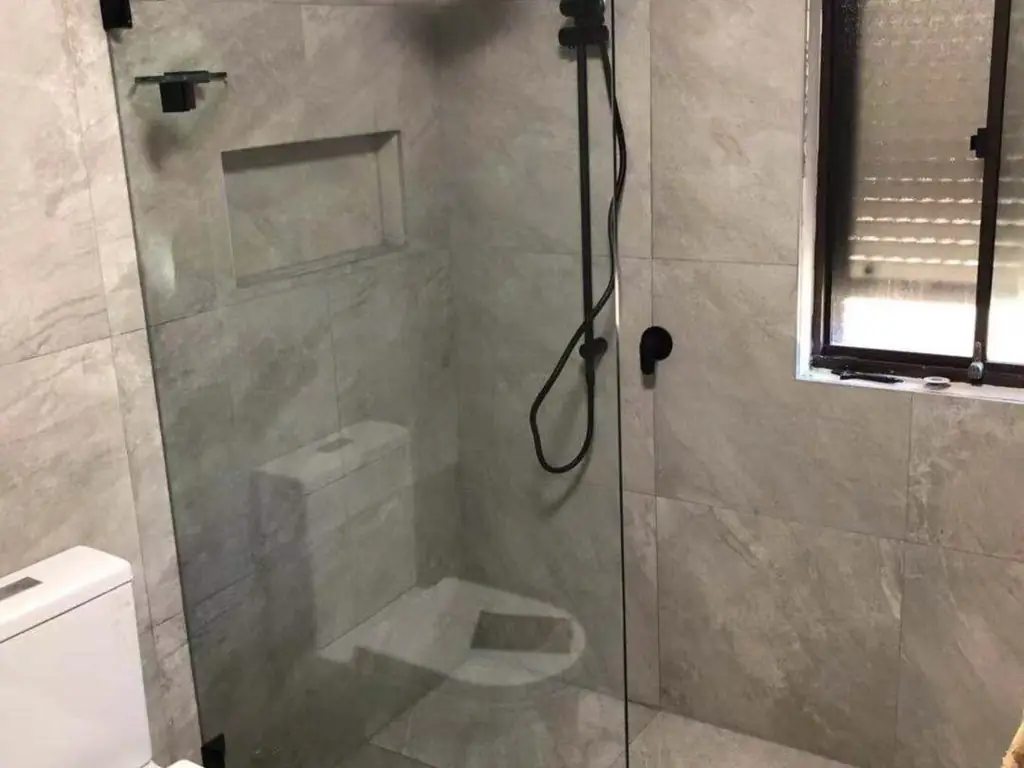
The Western Sydney housing eras that matter
Almost every job out here falls into one of three buckets, and each one has a different risk profile. Knowing which bucket you are in tells you more about your quote than any tile selection will.
- Bathrooms completed in Western Sydney
- 180+Bathrooms completed in Western Sydney
- Typical time on site
- 3–4 wksTypical time on site
- NSW builder #393475C
- LicensedNSW builder #393475C
| Era | Typical construction | What drives the cost |
|---|---|---|
| 1960s–1975 | Fibro or brick veneer, timber floor or early slab | Asbestos testing, no membrane, drainage in poor condition |
| 1976–1990 | Brick veneer on slab, rendered wet-area walls | Re-sheeting walls, no fall to waste, separate toilet layout |
| 1991–2005 | Brick veneer on slab, PVC drainage | Mostly cosmetic — fixtures, tile sizes, shower size |
Swipe the table to see all columns.
Blacktown: 1960s–80s homes where the bathroom has done its time
Blacktown is the suburb we are called into most. The pattern is consistent: a small main bathroom, a separate toilet next to it, waist-height tiles, and a shower over a bath or a moulded base that no longer drains properly.
There is rarely a waterproof membrane. What is holding the water out is the tile and the grout, which is why the first sign of trouble is usually a damp patch on the other side of the wall rather than anything visible in the bathroom.
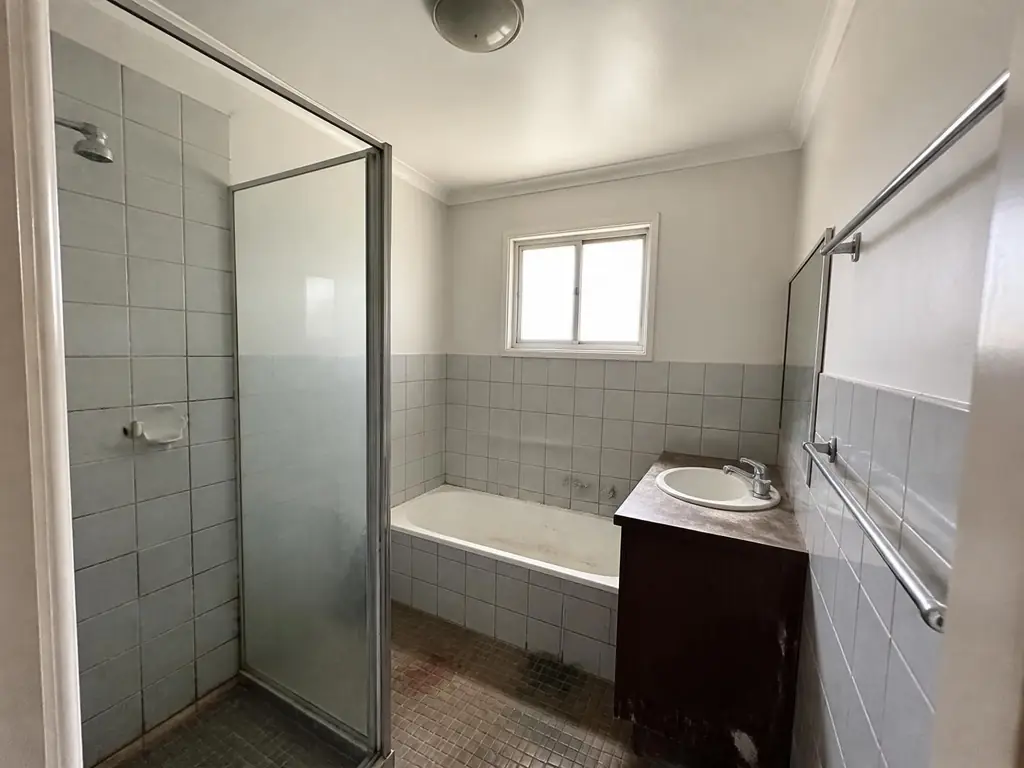
The change that transforms these bathrooms
Taking out the wall between the toilet and the bathroom turns two cramped rooms into one usable one. It is not always possible — sometimes the wall is loadbearing or the drainage will not cooperate — but when it is, nothing else comes close for impact.
- One room instead of two, with room for a 1100–1200mm shower
- A single tiled floor with a proper fall to the waste, not a patched step
- Wall-hung vanity and a concealed cistern to buy back floor space
What we check before promising a layout change
Old earthenware and cast-iron drainage lines under a slab are common here and do not always sit where the plans say. We work out how far the waste can move at the measure so the quote reflects reality rather than optimism.
Seven Hills: patched-once, never rebuilt
Seven Hills homes have usually had one cosmetic update along the way — a new vanity, a re-silicone, sometimes a shower screen. Underneath, the original 1970s wet-area build is intact, including the parts that were never waterproofed.
That makes half-measures a poor investment here. Re-tiling over a floor with no membrane and no fall buys three or four years. Stripping back to frame, sheeting properly, waterproofing to AS 3740 and setting a real fall buys twenty.
- Rendered brick walls usually need re-rendering or re-sheeting to a true face before large-format tiles
- Original exhaust fans generally vent into the roof space — we duct them outside, which fixes most persistent mould complaints
- Old switchboards sometimes need an upgrade for new heated towel rails or in-slab heating
Quakers Hill: 1990s brick veneer, mostly cosmetic work
Quakers Hill is the easiest suburb we work in. Slab-on-ground, PVC drainage, brick veneer, and bathrooms that are structurally sound but visibly of their decade — small tiles, a corner spa, mirrored shaving cabinet, chrome everything.
Because the bones are fine, the money goes where you can see and use it: a wider shower, a stone-topped wall-hung vanity, large-format tiles, and a decent tapware suite. Programs are shorter too, because nothing stops for remediation.
| Item | Share of budget | Notes |
|---|---|---|
| Labour (strip-out, waterproofing, tiling, trades) | 45–55% | The part that determines whether it lasts |
| Tiles and stone | 12–18% | Large format costs a little more to lay, far less to maintain |
| Fixtures, tapware, glass | 18–25% | Biggest discretionary swing in the quote |
| Rubbish removal, protection, certificates | 5–8% | Should be listed, not buried in a lump sum |
Swipe the table to see all columns.
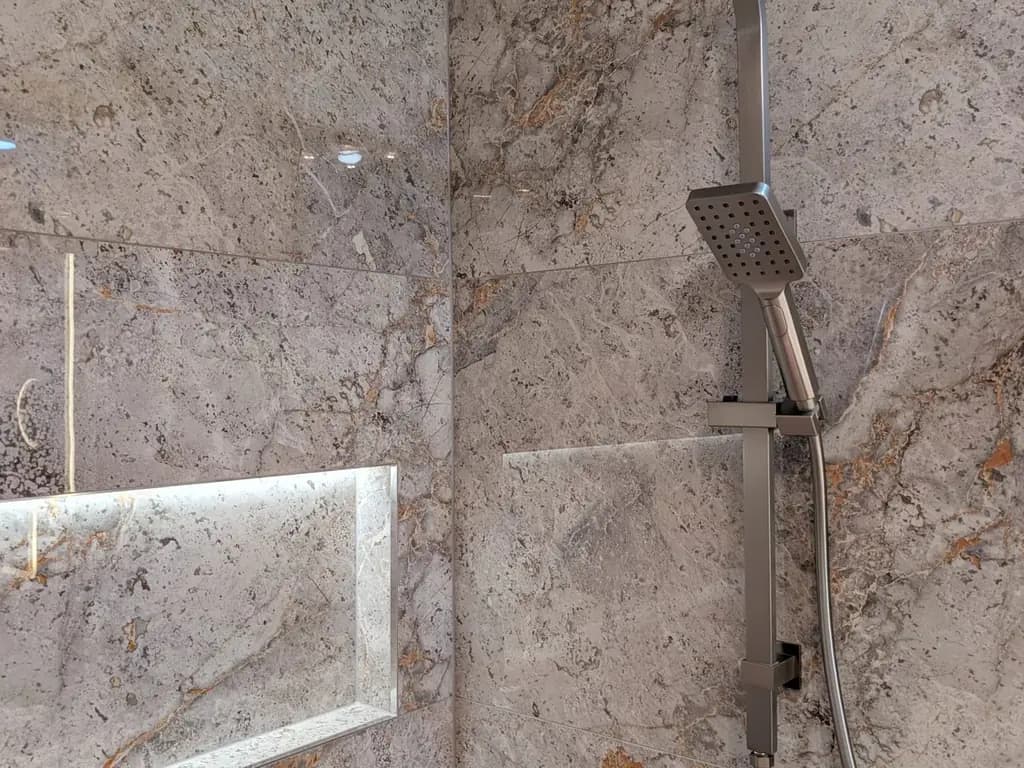
Real 2026 costs across Western Sydney
These are full strip-out and rebuild ranges including waterproofing, tiling, plumbing, electrical, fixtures, protection and rubbish removal. Every quote we send is itemised so you can see exactly which line moves if you change a selection.
| Suburb | Main bathroom | Small bathroom / shower room | Two rooms together |
|---|---|---|---|
| Blacktown | $20,000 – $31,000 | $15,000 – $22,000 | $32,000 – $48,000 |
| Seven Hills | $20,000 – $32,000 | $15,000 – $23,000 | $33,000 – $49,000 |
| Quakers Hill | $22,000 – $33,000 | $16,000 – $24,000 | $35,000 – $52,000 |
Swipe the table to see all columns.
How the job runs, week by week
Three to four weeks on site is the honest answer for one bathroom out here, a little longer if asbestos removal or drainage repair is involved. The way we keep it tight is locking selections before demolition starts, so no trade is ever waiting on a delivery.
- Before we start — on-site measure, itemised quote, asbestos test if pre-1990, all selections ordered
- Week 1 — strip-out and disposal, any remediation, plumbing and electrical rough-in
- Week 2 — substrate and sheeting, licensed waterproofing with photos at each coat, screed
- Week 3 — tiling and grouting, vanity, toilet, shower screen
- Week 4 — tapware, silicone, final electrical, clean, handover with waterproofing certificate